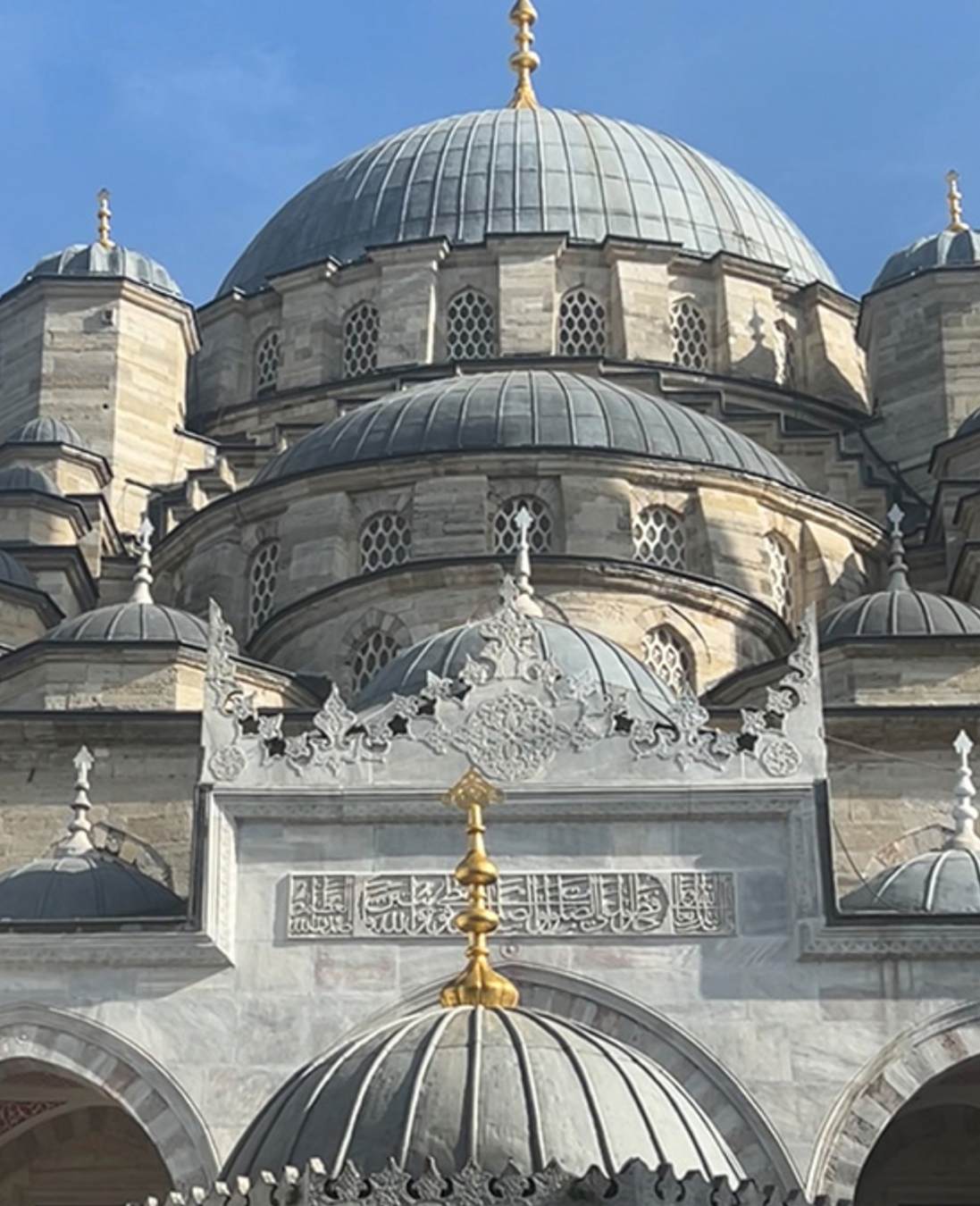

There are countless great places to stay in Istanbul, but we always choose the Bank Hotel in the Karaköy district, adjacent to the Galata Tower. Converted from a former bank, the hotel is agorgeous blend of grand 19th-century and contemporary architecture. Check out the rooftop bar— you will be greeted with excellent service and a stunning view across the Golden Horn.

It's an unbeatable location that we choose over and over again for its charm and convenience. The hotel is also perfectly positioned for an early dawn walk across the Galata bridge, passing a multitude of fishermen and seagulls. The traffic in Istanbul is relentless, and the best way to get around is by foot. We love to walk everywhere and immerse ourselves in the sights, sounds, and smells; we only ever use taxis to get to and from the airport, but otherwise, the light rail is also very easy to use.
Once across the bridge, you will arrive at the old spice markets, also known as the EgyptianBazaar, established over 450 years ago. The markets are a visual delight, filled with endless piles of colourful spices, dried fruits, and sweets delicately piled on to catch the eye of the curious.
Keep walking beyond the spice markets and follow the winding streets up the hill to the Grand Bazaar. We have walked the Grand Bazaar for days on end and still have not seen everything there is to see —it is that vast. Established in the 15th century, it is one of the world's largest covered markets —over 30000 square metres, hosting thousands of stores, vendors, traders, andartisans. It's a destination heaving with activity, which can be overwhelming - we recommend getting an early start. We love our time in this place as a boundless source of inspiration: you'll find endless measures of jewellery, textiles, carpets, leather goods, fashion, antiques, spices, and great food!
If you appreciate architecture and antiquities, the Basilica Cistern is a must-see in Istanbul. Only a10-minute walk from the Grand Bazaar, this stunning example of a Roman-era cistern is also known in Turkish as The Sunken Palace because of its beauty and the grandeur of its proportions.Originally built about 1500 years ago to store and supply water to Constantinople, it recently reopened for people to explore after a lengthy maintenance period, and it was well worth the wait and effort.